War gods in 8 world mythologies
In brief
A comparison of war deities in Greek, Roman, Norse, Egyptian, Japanese, Hindu, Aztec, and Celtic mythologies.
- Greek mythology
- Roman mythology
- Norse mythology
- Egyptian mythology
- +4
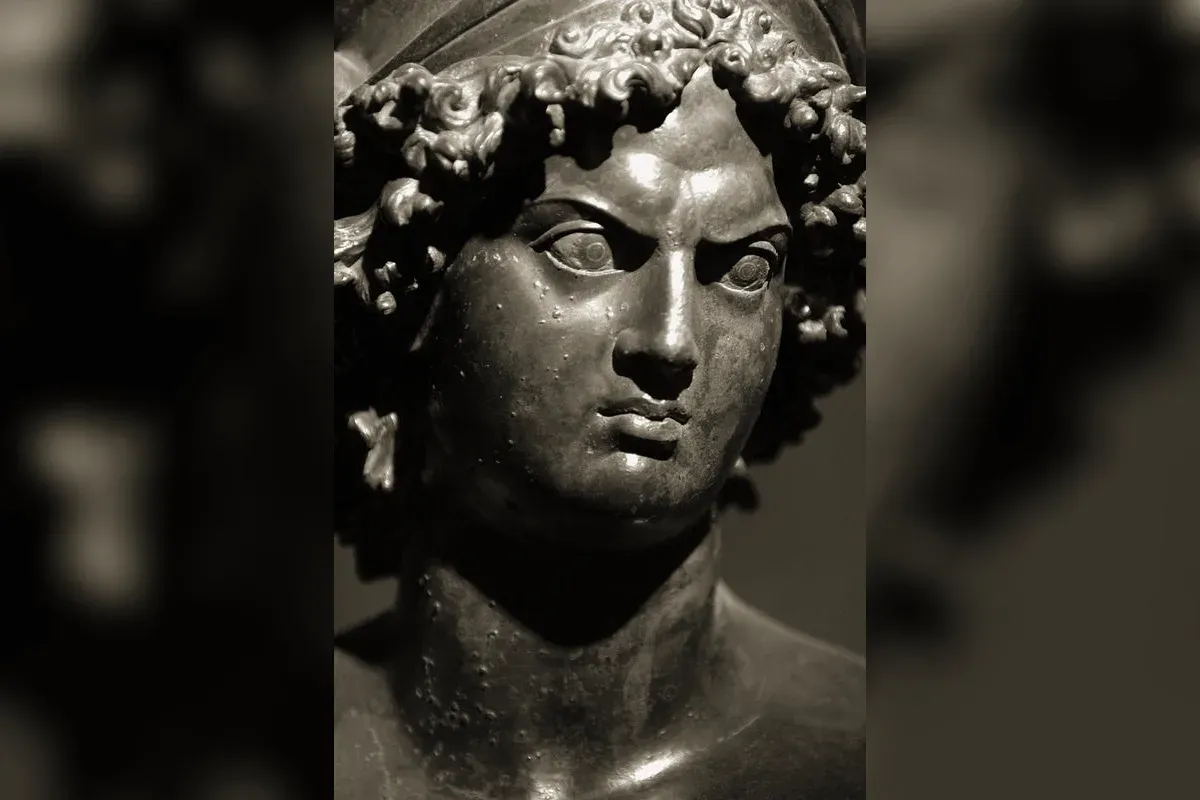
Nearly every major civilization placed war near the center of its religious imagination. Yet the label “war god” hides very different ideas: war as uncontrollable rage, as civic duty, as sacred protection, as justice, or even as cosmic necessity. Comparing these divine figures reveals how each culture understood violence and legitimacy.
1. Ares: Greek battle fury
In Greek myth, Ares embodies the most brutal side of war: bloodshed, uproar, panic, and physical violence. Even the Olympians keep him at a distance. Homer presents him as destructive rather than noble.
Greek tradition balances him with Athena, who represents strategy, discipline, and intelligent warfare. The contrast between Ares and Athena is one of the clearest signs that Greek myth does not imagine war as a single divine function.
2. Mars: Roman civic warfare
Roman Mars is not merely Ares under another name. He becomes a foundational god of the Roman state, father of Romulus and a symbol of public order, military discipline, and expansion. In Rome, war is tied to citizenship and political structure.
3. Tyr: Norse justice and oath
In Norse myth, Tyr is associated not only with combat but with justice and sworn obligation. His most famous act is the sacrifice of his hand to bind Fenrir. Here, war is inseparable from honor and legal order.
4. Sekhmet and Seth: Egyptian devastation and chaos
Egyptian Sekhmet, lion-headed and terrifying, embodies war as plague, royal wrath, and annihilating force. Yet she also carries healing powers. Her figure shows how destruction and restoration can belong to the same divine energy.
Seth, the red-skinned god of chaos and the desert, represents a second Egyptian angle on war: brute force, desert storms, and the violence that is necessary rather than merely destructive. As guardian of Ra’s solar barque against the serpent Apophis, Seth’s aggression becomes the cosmos’s last line of defence — chaos weaponised against deeper chaos.
5. Hachiman: Japanese protection
In Japan, Hachiman is less a god of blind slaughter than a protector of warriors and communities. His role links warfare to guardianship, dynasty, and social cohesion.
6. Kartikeya: Hindu command and victory
Kartikeya or Murugan, son of Shiva, commands the armies of the gods. In Hindu traditions, warfare often carries a spiritual dimension: victory over enemies can also represent victory over disorder, ego, and demonic forces.
7. Huitzilopochtli: Aztec cosmic war
Among the Aztecs, Huitzilopochtli is both solar and martial. His warfare is cosmic: he battles the forces of darkness so that the sun may rise again. Human warfare and ritual feeding of the gods participate in that larger struggle.
8. The Morrigan: Celtic fate on the battlefield
The Irish Morrigan is not simply a battlefield fighter. She hovers over combat as prophecy, terror, and doom, often in the form of a crow. In her case, war is bound to fate and the choosing of the dead.
Synthesis
These figures all occupy the same broad role, yet they do not mean the same thing. Ares is rage, Athena is calculated force, Mars is civic power, Tyr is oath-bound honor, Sekhmet is devastation, Hachiman is protection, Kartikeya is sacred command, Huitzilopochtli is cosmic struggle, and the Morrigan is fatal destiny.
Studying war gods comparatively makes one point clear: mythologies do not simply justify violence. They classify it, fear it, ritualize it, and try to explain when it becomes legitimate.
See also
Frequently asked questions
Which war god was the most respected in antiquity?
Mars in Rome was generally more publicly honored than Ares in Greece, where Ares is often portrayed as violent and unstable rather than civic and protective.