Greek mythology · Heroes & mortals
Achilles, hero of the Trojan War in Greek mythology
In brief
Achilles, son of Peleus and Thetis: near-invulnerability, the quarrel with Agamemnon, the death of Patroclus and the fatal heel. Central figure of the Iliad.
- war
- heroic glory
- tragic fate
- armor forged by Hephaestus
- +3
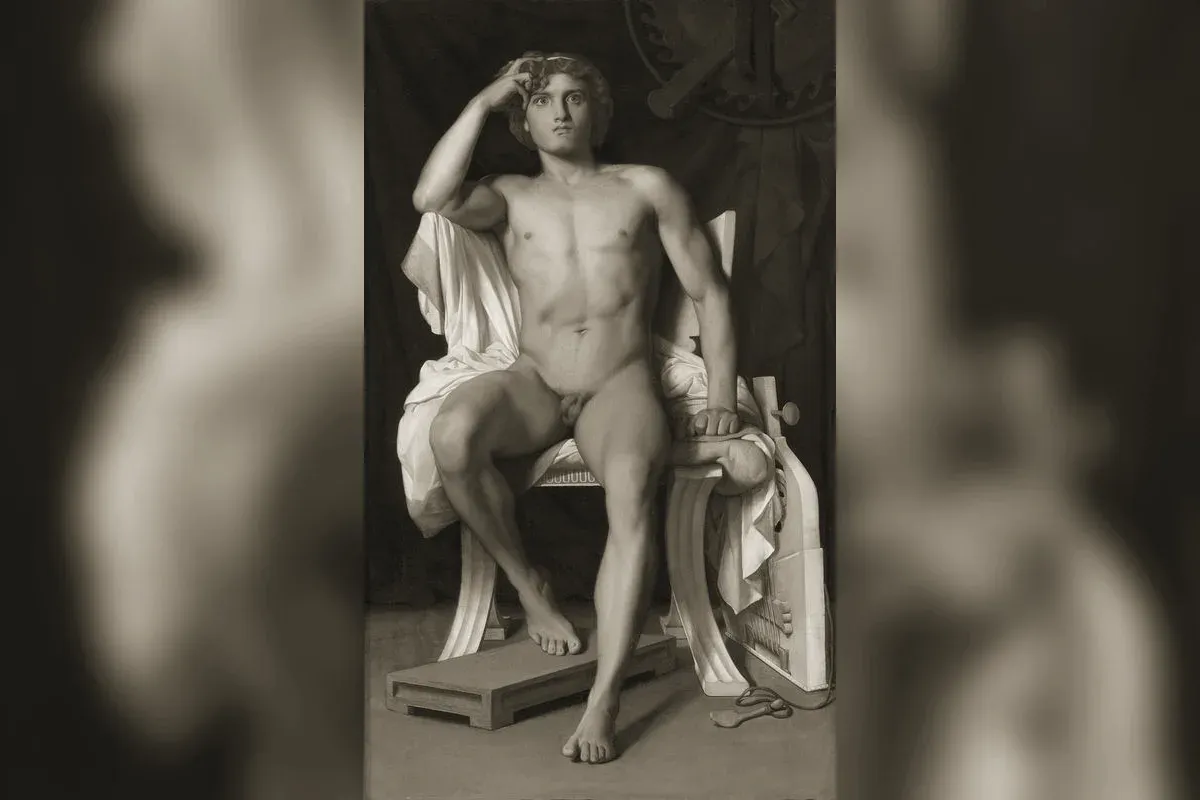
Achilles is the greatest warrior of the Greek tradition, the living embodiment of aristeia — heroic excellence pushed to its absolute limit. His story, told at the heart of Homer’s Iliad, is above all a story of rage, grief, and the choice between a long life and eternal glory.
Birth and near-invulnerability
Achilles is the son of King Peleus of Phthia and the Nereid Thetis, a sea goddess. From birth, his mother seeks to protect him from mortal fate. The most widely known version — absent from Homer — tells that she dips him in the Styx holding him by the heel, rendering his body invulnerable everywhere except that spot.
In Homer the picture is more nuanced: Achilles is simply the strongest and fastest of all mortals, not invulnerable but near-divine in his capabilities. His childhood is spent partly with the centaur Chiron on Mount Pelion, who trains him in both arms and the healing arts.
The choice of fate
The prophecy weighing on Achilles is terrifyingly precise: he has a choice between two fates. The first: a long, peaceful life, obscure and forgotten. The second: a young death at Troy, but kleos — glory — that will cross the centuries.
Achilles chooses glory. This deliberate choice of glorious death over obscure life is one of the moral pivots of all Greek heroic thought. His encounter with his own shade in the Underworld — recounted in the Odyssey — will revisit that choice with devastating honesty.
The quarrel with Agamemnon
The Trojan War lasts ten years. In the tenth year, a quarrel erupts that throws the war off course. Agamemnon, king of kings, forced by Apollo to return his captive Chryseis, seizes Briseis — Achilles’s war prize — as compensation.
Achilles erupts in overwhelming rage — this is precisely the first word of the Iliad: menis, sacred wrath. He withdraws from battle with his Myrmidons. Without him, the Greeks are pushed back to their ships. Zeus honors Thetis’s request by favoring the Trojans during Achilles’s absence.
The death of Patroclus and the return
What tears Achilles from his withdrawal is the death of his closest companion: Patroclus.
Patroclus, unable to bear the Greek retreat, persuades Achilles to let him fight in his armor to hearten the troops. He spreads panic among the Trojans — but advances too far. The Trojan champion Hector, aided by Apollo, kills him.
Achilles’s grief is total. His rage shifts from Agamemnon to Hector and the Trojans. His mother Thetis goes to Hephaestus and commissions a new suit of armor forged in a single night — the cosmic shield, a feat of divine craftsmanship described across a hundred lines of Homer.
The duel with Hector
Achilles returns to battle. The Trojans flee in terror. Hector chooses to face Achilles alone before the gates of Troy while King Priam and Queen Hecuba beg him to retreat.
The duel is brutal and brief. Achilles kills Hector, then desecrates the body by tying it to his chariot and dragging it around the walls of Troy. The Iliad closes on an unexpected gesture of grace: Achilles agrees to return Hector’s body to the aged King Priam, who has come as a suppliant to his tent, and observes a truce for the funeral rites.
The death of Achilles
The Iliad does not recount the death of Achilles — it closes on this truce. But later traditions (notably the Trojan Cycle epics) record that Achilles is killed shortly after: an arrow from Paris, guided by Apollo, strikes his heel.
The death confirms the prophecy. Achilles dies young — but his name crosses the millennia, exactly as he had chosen. His shade persists in the Underworld, as the Odyssey later reveals.
A universal legacy
Achilles is the archetype of the Greek tragic hero. His rage, his tenderness toward Patroclus, his conscious acceptance of an early death, his capacity for both massacre and grace — these make him one of the most complex characters in all world literature.
Alexander the Great claimed descent from him and visited his tomb at Troy before launching his campaigns. The phrase “Achilles’ heel” now designates in every European language a hidden weak point within a greater strength.
Further reading
For the full story of the siege of Troy, the Trojan Horse, and the sack of Ilium, read the Trojan War. For the forging of his divine armor, read the page on Hephaestus. For Apollo who guides the fatal arrow, see the page on the archer god. For the divine war tradition Achilles embodies, read the war-gods comparison. For what the shade of Achilles reveals about glory and death, read the Odyssey.
Ancient sources
- Homer, Iliad, 1, 18, 22 and 24
- Apollodorus, Library, 3.13 and Epitome, 4-5
- Statius, Achilleid
- Quintus Smyrnaeus, Posthomerica, 3
See also
Frequently asked questions
Why is Achilles nearly invulnerable?
His mother Thetis, a sea goddess, seeks to protect him from his mortal fate. The best-known version — found in Statius, not Homer — tells that she dips him in the river Styx, holding him by the heel. The unheld portion remains vulnerable. Homer's version makes no mention of this: Achilles is simply the greatest of mortals.
What is Achilles's tragic choice?
Prophecy offers him two fates: a long, obscure life in peace, or an early death in glory at Troy. Achilles chooses glory — kleos — knowing he will die young.
How does Achilles die?
He is killed by an arrow shot by Paris and guided by Apollo, which strikes his heel — his only vulnerable point in the later tradition. In Homer's account, Apollo simply guides the arrow to its mortal target.