Aphrodite, goddess of love and beauty in Greek mythology
Aphrodite, Greek goddess of love, desire and beauty: birth from seafoam, attributes, major myths and ancient cult.
Eastern Mediterranean, the ancient Greek world
A guide to Greek mythology: Titans and Olympians, heroes and monsters, the Trojan and Theban cycles, the Underworld, and the ancient sources from Homer to Ovid.
Aphrodite, Greek goddess of love, desire and beauty: birth from seafoam, attributes, major myths and ancient cult.
Apollo, Greek god of light, music, poetry and prophecy: attributes, birth, the Oracle of Delphi and his major myths.
Ares, Greek god of war and battle fury: attributes, genealogy, major myths, his opposition to Athena and his cult in antiquity.
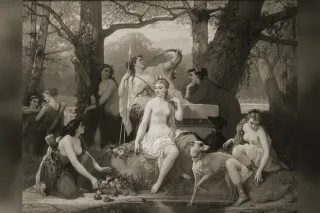
Artemis, virgin goddess of the hunt, the moon, and wild animals: attributes, birth, key myths and cult in Greek mythology.
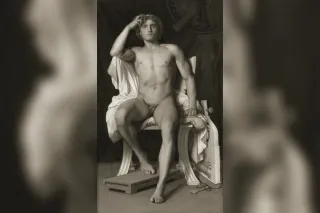
Achilles, son of Peleus and Thetis: near-invulnerability, the quarrel with Agamemnon, the death of Patroclus and the fatal heel. Central figure of the Iliad.
Aeneas in Greek myth: son of Anchises and Aphrodite, rescued by gods in the Iliad, carrier of his father out of burning Troy, and legendary forefather of Rome.
Aeolus son of Hellen: the Thessalian king whose descendants map the Greek dialect groups, and how to tell him from the keeper of the winds.
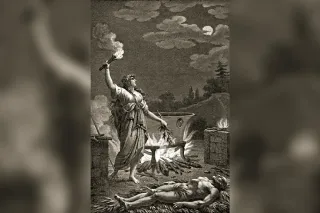
Aeson: the king deposed by Pelias, the child smuggled to Chiron, and the rejuvenation by Medea that Ovid turns into a manual of magic.
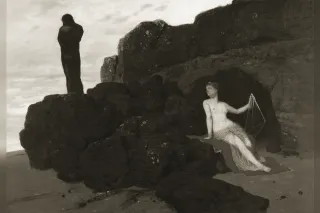
Calypso in the Odyssey: seven years on Ogygia, an offer of immortality that Odysseus turns down, and her protest against the gods' double standard.
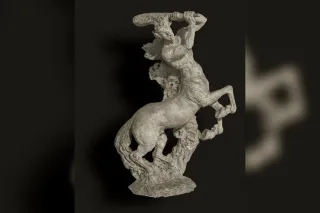
Greek Centaurs: half-man half-horse, their origin, the Centauromachy against the Lapiths, wise Chiron as teacher to heroes, and their place between nature and civilization.
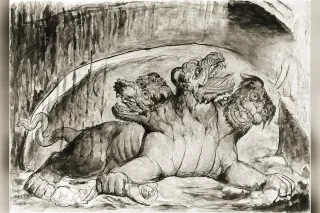
Cerberus, the three-headed dog guarding the realm of Hades: origin, role in the underworld, the twelfth labor of Heracles, and other mortal intrusions.
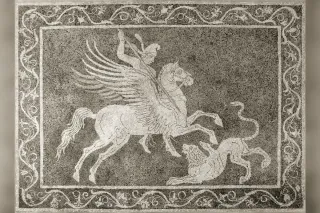
The Chimera, Greek hybrid monster with a lion's head, goat's body, and serpent's tail: divine origin, devastation of Lycia, and death at the hands of Bellerophon riding Pegasus.
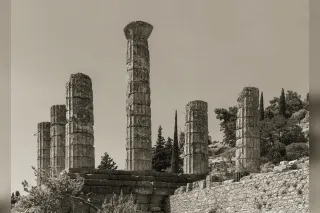
Delphi in Greek mythology: sanctuary of Apollo, seat of the Pythia, and the most influential oracle of antiquity. Mythological role, cult, and enduring legacy.
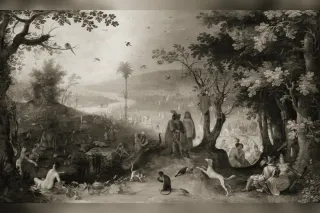
Elysium in Greek mythology: a blessed realm promised to certain heroes, then a reward for just souls in later traditions.
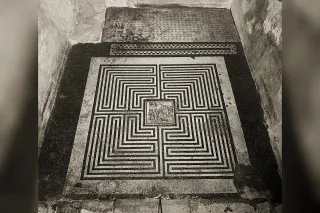
The Labyrinth in Greek mythology: the maze built by Daedalus for King Minos to hold the Minotaur, escaped by Theseus thanks to Ariadne's thread.
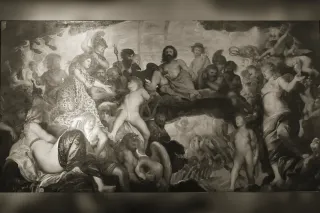
Mount Olympus in Greek mythology: the sacred mountain of the twelve Olympian gods, its cosmic role in Homer and Hesiod, and its place at the heart of the Greek universe.
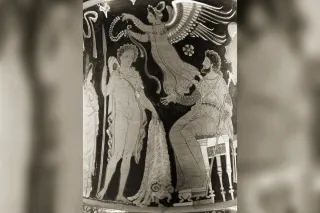
The Golden Fleece in Greek mythology: the hide of the divine ram Chrysomallus, treasure of Colchis guarded by a dragon, and the legendary prize of Jason and the Argonauts.
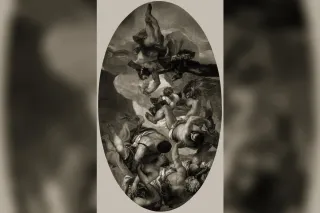
The Thunderbolt of Zeus in Greek mythology: forged by the Cyclopes, weapon of the Titanomachy, and the ultimate symbol of Zeus's supreme sovereignty over gods and mortals.
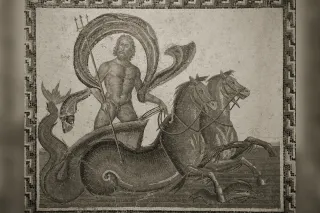
The Trident of Poseidon in Greek mythology: forged by the Cyclopes, weapon and sceptre of the god of the seas, symbol of his dominion over waters, earthquakes, and horses.
Origins
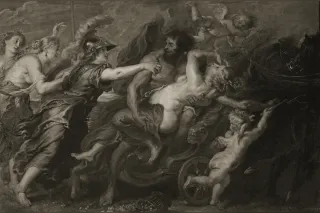
The abduction of Persephone by Hades: Demeter's grief-stricken search, the pomegranate seeds, and the bargain with Zeus that explains the origin of the seasons.
Creation myths
The Greek creation myth in Hesiod's Theogony: from primordial Chaos to Gaia, from the Titans to the Olympians, the ordered birth of the cosmos.
Journeys & quests
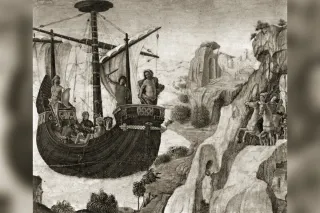
Jason assembles the Argonauts to seize the Golden Fleece from Colchis: the Clashing Rocks, Medea's magic, fire-breathing bulls, and the sleepless dragon.
Mythical wars
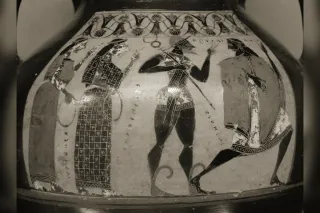
The Judgement of Paris: the apple of discord, the three goddesses' rival offers, Paris's fatal choice of Aphrodite, and the abduction of Helen that triggers the Trojan War.
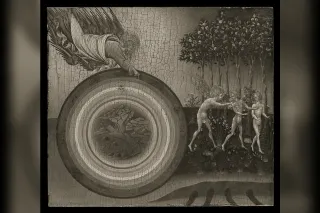
Creation myths compared: Greek Chaos, Egyptian Nun, Norse Ginnungagap and Mesopotamian combat. How each tradition wrests an ordered world from chaos.
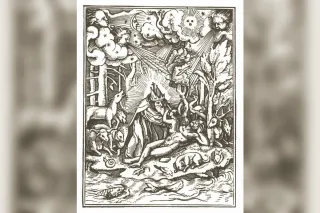
A comparison of death deities and underworld rulers in Greek, Egyptian, Norse, Roman, Japanese, Hindu, Aztec, and Celtic mythologies.
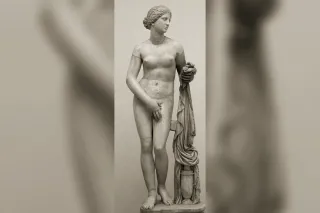
A comparison of love deities in Greek, Roman, Norse and Egyptian mythology: Aphrodite, Venus, Freya, Hathor, Eros and Cupid compared across traditions.
Greek mythology is the body of stories, divine family trees and beliefs through which the ancient Greeks explained how the world began, what their gods controlled and what their heroes achieved. It has no sacred scripture. Poets sang it, playwrights staged it, vase painters illustrated it, and each city told it its own way, which is why almost every myth survives in more than one version. Its roots go back a long way: Linear B tablets from Knossos and Pylos, written in the 14th and 13th centuries BCE, already name Zeus, Hera, Poseidon, Hermes and Dionysus. Its classical shape, though, comes from Homer and Hesiod in the 8th and 7th centuries BCE.
This guide lays out how the whole system fits together: the generations of gods, the Olympian pantheon, heroes and monsters, the great story cycles, the afterlife, and the ancient sources that preserved them.
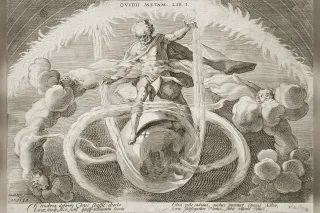
The standard account is Hesiod’s Theogony (c. 700 BCE). First comes Chaos, the primordial void, followed by Gaia, the Earth, along with Tartarus and Eros. Chaos produces Erebus and Nyx, the Night. Gaia, on her own, gives birth to Uranus, the Sky, and then takes him as her partner.
Power changes hands through violence. Uranus keeps his children trapped inside Gaia until the Titan Cronus castrates him with a jagged sickle his mother made. From the blood that falls on the earth spring the Furies and the Giants, and from the sea foam rises Aphrodite. Once king, Cronus swallows every child Rhea bears him. To save the youngest, Zeus, she hands Cronus a stone wrapped in swaddling clothes and hides the baby on Crete.
Once grown, Zeus forces his father to vomit up his siblings and leads them in a ten-year war against the Titans, the Titanomachy. He wins with the help of the Hundred-Handers and the Cyclopes, who give him his thunderbolt. The defeated Titans are locked away in Tartarus, and Zeus must still overcome Typhon, Gaia’s last challenge. In the Iliad (15.187–193), Poseidon recalls the drawing of lots that set up the new order: the sky went to Zeus, the sea to Poseidon, the gloom below to Hades, while the earth and Olympus stayed common to all three.
Hesiod’s is not the only version. Homer calls Oceanus “the origin of the gods” and Tethys their mother (Iliad 14.201), and the Orphic theogonies start with Night or with Phanes, hatched from a cosmic egg. Details shift as well. In Hesiod, Cronus is fooled by Gaia’s schemes; in Pseudo-Apollodorus, Metis gives him a drug that makes him throw up his children. The full story is told in the Greek creation myth.
After their victory, Zeus and his siblings settle on Mount Olympus, the highest peak in Greece (2,918 m), on the border between Thessaly and Macedonia. The Greeks spoke of “the Twelve Gods”, and Athens set up an altar to them in its agora as early as 522 BCE (Thucydides 6.54). Yet the membership was never fixed. The usual list runs:
On the east frieze of the Parthenon, Dionysus sits among the Twelve and Hestia is absent. The popular story that she gave up her seat to him was spread in the 20th century by Robert Graves and has no known ancient source. Hades, Zeus’s brother, is not an Olympian at all: he rules beneath the earth with Persephone.
The Greek pantheon reaches far beyond the Twelve. First come the other Titans, children of Uranus and Gaia. They include Oceanus and Tethys, and Hyperion and Theia, parents of the Sun, the Moon and the Dawn (Helios, Selene and Eos). Alongside them stand Iapetus, Themis and Mnemosyne, mother of the Muses, the foremost of whom is Calliope. The sons of Iapetus, Atlas, Prometheus and Epimetheus, link the story of the gods to the story of humankind.
A distinctly Greek habit is personification: abstract ideas become gods with parents and offspring of their own. Nyx gives birth to Hypnos and Thanatos, Sleep and Death, as well as to Eris, Strife, and Nemesis, due retribution. Victory (Nike) and Fortune (Tyche) had their own statues and shrines.
The sea has its own gods: Proteus and Phorcys, the Old Men of the Sea, Triton, and the Nereid Thetis. Even the winds are gods, from Boreas to Zephyrus. Finally, Hecate, Pan and Asclepius mattered far more in actual worship than their modest role in the great stories would suggest.
In Greek religion, a hero is more than a character in a story. He is an exceptional mortal, often the son of a god, who is worshipped at his tomb after death. Hesiod treats heroes as a race of their own, the “demigods”, some of whom are carried off after death to the Isles of the Blessed (Works and Days 156–173).
The most famous combine divine blood with superhuman trials:
Others earn their place through great deeds, like Jason and Bellerophon, or through cunning, like Odysseus. Women play parts just as decisive: Medea, Ariadne, Helen, Penelope and Antigone.
On the other side, many monsters belong to a single family. According to Hesiod, Echidna and Typhon produce Orthus, Cerberus and the Lernaean Hydra. The Chimera, the Sphinx and the Nemean Lion come from the same line. Medusa, the only mortal among the three Gorgons, is a daughter of Phorcys and Ceto. The Minotaur is born of Pasiphae and the Cretan Bull. Most great heroes are in fact defined by the monster they kill: Perseus by Medusa, Bellerophon by the Chimera, Theseus by the Minotaur, Oedipus by the Sphinx.
Greek myths cluster into cycles: groups of stories that share characters and an internal timeline.
For Homer’s Greeks, most of the dead are neither punished nor rewarded: they become strengthless shades in the realm of Hades. In the Odyssey (11.489–491), the ghost of Achilles tells Odysseus he would rather be a hired hand for a poor farmer on earth than rule over all the dead. Later Greeks pictured the crossing on the boat of the ferryman Charon, paid with an obol, with Cerberus guarding the gate.
Two places stand apart. Tartarus lies as far below Hades as the sky is above the earth (Iliad 8.16) and holds the Titans and the great sinners such as Sisyphus and Ixion. Elysium, by contrast, welcomes a chosen few: in the Odyssey (4.561–569), Proteus tells Menelaus that he will end his days there without ever dying. To set this underworld beside the Egyptian Duat or the Norse Hel, see the comparison of gods of death across 8 mythologies.
Greek myths were never just literature: they underpinned religious practice. At Delphi, the Pythia spoke Apollo’s oracles on the spot where he was said to have slain the serpent Python. At Eleusis, the Mysteries let initiates relive Demeter’s search and Persephone’s return. Athenian theatre was itself a ritual: the tragedies of Aeschylus, Sophocles and Euripides were performed in competition at the City Dionysia, a festival of Dionysus. Olympia hosted the games in honour of Zeus, traditionally first held in 776 BCE, and the sanctuary of Asclepius at Epidaurus drew the sick from across the Greek world.
Greek mythology reaches us in successive layers, and every author reshapes it.
With no canon, variants matter. In Hesiod, Aphrodite is born from sea foam; in Homer, she is the daughter of Zeus and Dione (Iliad 5.370). In Stesichorus, and later in Euripides’ Helen, Helen never went to Troy at all: Greeks and Trojans fought over a phantom shaped by the gods while the real Helen waited in Egypt.
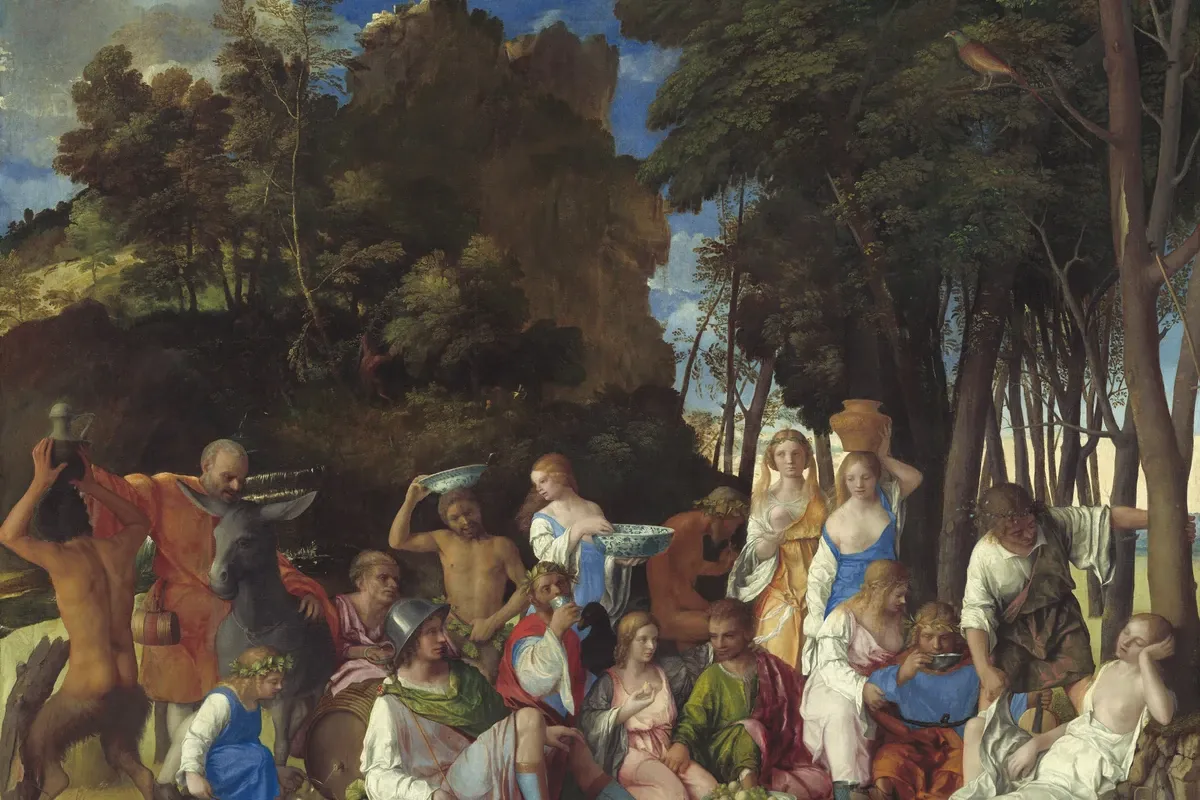
Rome identified the Greek gods with its own, and the Renaissance often rediscovered them under their Latin names, from Bellini and Titian’s Feast of the Gods (1514–1529) to Botticelli’s Birth of Venus. English is full of traces:
Psychoanalysis took its “Oedipus complex” from Sophocles, and the night sky is still crowded with Greek figures, from the Pleiades to the constellations of Perseus and Andromeda.
The succession struggle between Uranus, Cronus and Zeus has striking parallels in the ancient Near East. In the Hurrian myth of Kumarbi, the Sky god is also castrated by his successor before a storm god takes the heavenly throne. To follow these threads, see creation myths compared, the war gods and the gods of love, as well as the hubs for Egyptian mythology and Norse mythology.