Egyptian mythology · Gods & goddesses
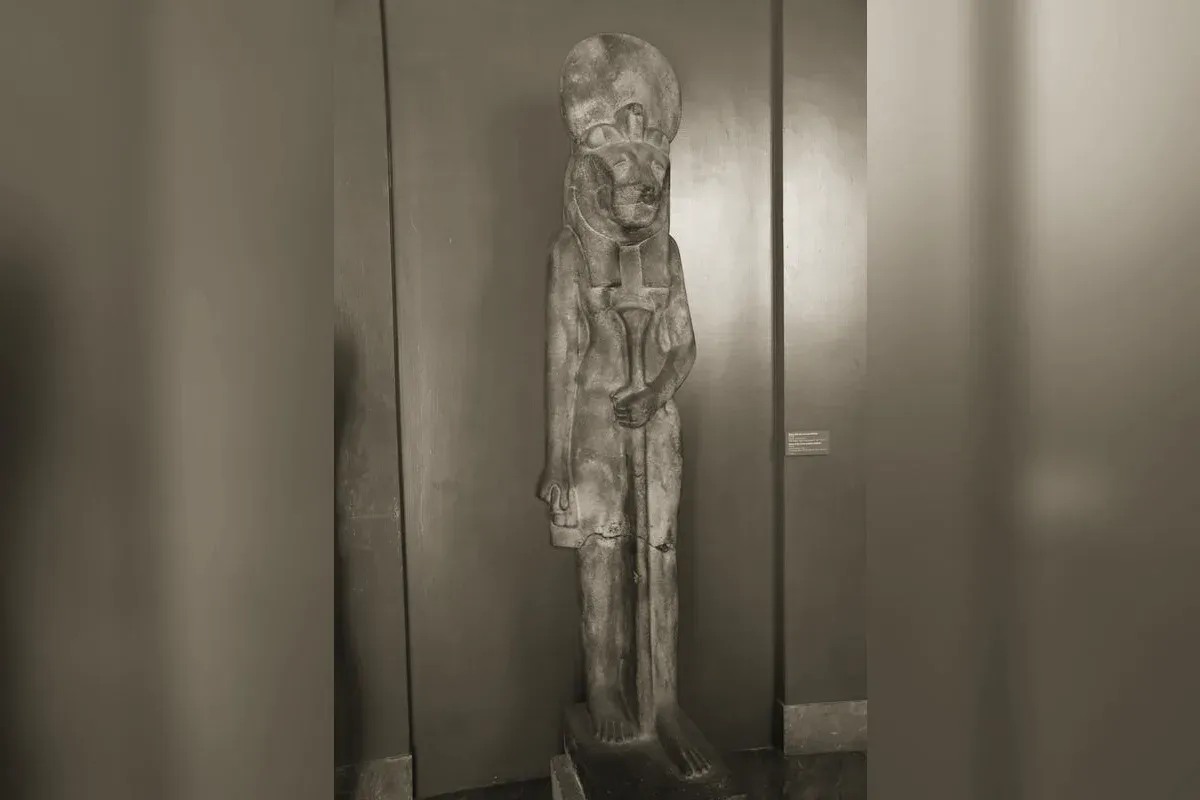
Sekhmet, the Egyptian lioness goddess of war and healing
In brief
Sekhmet, the Egyptian lioness goddess: Eye of Ra and the Destruction of Mankind, burning breath and plagues, yet also a dreaded healer and guardian of Memphis.
- war and destruction
- solar vengeance
- plague and pestilence
- healing and medicine
- +5
Who is Sekhmet?
Sekhmet is the lioness goddess of Egyptian mythology, the embodiment of solar power in its most destructive form. Her name means “the Powerful One,” and everything about her expresses active force: the burning breath of the desert, the arrow that never misses, the epidemic that empties villages. Yet this goddess of terror is also a healer — for she who can send plagues is the only one who can hold them back. This double nature, terrifying and protective, makes Sekhmet one of the most intense figures in the Egyptian pantheon.
Role, nature, and domains
Sekhmet is above all a goddess of war and vengeance. She is called “she before whom evil trembles,” whose breath creates the desert and whose arrows pierce the pharaoh’s enemies. The Egyptians attributed epidemics to her: her “messengers,” disease-bearing demons, struck each year, especially at the end of summer, the dreaded season of fevers.
But this link with sickness also makes her a goddess of medicine. Her priests, the wab-priests of Sekhmet, were among the most respected practitioners in Egypt: since the goddess sent the plagues, it was to her that one turned to avert them. Sekhmet thus embodies a characteristically Egyptian logic in which the force that wounds is also the force that heals.
The Eye of Ra and the Destruction of Mankind
Sekhmet’s founding myth is the Destruction of Mankind, preserved in the Book of the Heavenly Cow. An ageing Ra learns that humans are plotting against him. He sends out his Eye — the feminine solar power — to punish them, and this Eye rages in the form of Sekhmet. The lioness slaughters the rebels with such a bloodlust that she threatens to annihilate all of humanity, far beyond her mission.
To stop her, Ra orders vast quantities of beer to be brewed, dyed with red ochre, and poured out over the fields. Mistaking it for blood, Sekhmet drinks it greedily, grows drunk, and falls asleep; when she wakes, her fury has subsided. This story explains both the goddess’s terrifying power and the ritual need to appease her — an appeasement whose gentle side is embodied by Bastet and Hathor, other forms of the Eye.
Genealogy and place at Memphis
A daughter of Ra, Sekhmet is integrated at Memphis into the great local triad: wife of the creator god Ptah and mother of Nefertem, god of the primeval lotus. This affiliation makes her not merely a wild force but a member of a structured divine family, tied to the capital and its theology of creation.
Her leonine nature links her closely to other lioness and feline goddesses — Bastet, of course, but also Wadjet, Tefnut and Mut — so much so that these figures often exchange their traits. Sekhmet, however, remains the extreme pole of this family: the pure lioness, the one that nothing softens but ritual.
Cult, statues, and rites of appeasement
The pharaoh Amenhotep III (18th Dynasty) had several hundred statues of Sekhmet in black granodiorite erected in his mortuary temple and at Karnak — a colossal ensemble sometimes read as a “litany in stone,” one statue for each day of the year, meant to appease the goddess continually and keep pestilence from the kingdom. This unique ritual apparatus shows how seriously Egypt took the need to keep Sekhmet satisfied.
Each year, during the dangerous “epagomenal days” and the start of the inundation, specific rites and amulets sought to turn away the wrath of the goddess and her disease-bearing messengers.
What the ancient sources say
The myth of the Destruction of Mankind survives in the Book of the Heavenly Cow, inscribed in several New Kingdom royal tombs, including that of Tutankhamun. The Pyramid Texts and Coffin Texts already attest her role as fierce protector of the king. Numerous medical and magical papyri invoke Sekhmet and her messengers, confirming her dual status as bringer and healer of disease. The hundreds of Amenhotep III statues, now scattered through the world’s museums, form the most impressive material trace of her cult.
Further reading
For the solar god whose avenging Eye Sekhmet is, read the page on Ra. For the cat of Bubastis who is her pacified double, see the page on Bastet. For the other great embodiment of the Eye of Ra, turned toward joy, see the page on Hathor. To place Sekhmet among the great war deities of world mythology, read the comparison of war gods.
Ancient sources
- Book of the Heavenly Cow
- Pyramid Texts
- Coffin Texts
- Litanies of Sekhmet
See also
Frequently asked questions
What is Sekhmet the goddess of?
Sekhmet is the Egyptian goddess of war, destruction and solar vengeance, but also, by reversal, of healing. A daughter of Ra, she embodies the Eye of Ra in its most violent form: the lioness who unleashes fire, arrows and plague against the god's enemies. Her priests were reputed physicians, for she who sends pestilence can also drive it away.
Why did Sekhmet nearly destroy humanity?
In the myth of the Destruction of Mankind, humans plot against an ageing Ra. The god sends out his Eye, which takes the form of Sekhmet, to punish the rebels. But the lioness becomes drunk on slaughter and threatens to wipe out the entire human race. To stop her, Ra floods the fields with red-dyed beer, which she drinks believing it to be blood; intoxicated, she calms down and humanity is spared.
What is the connection between Sekhmet and Bastet?
Sekhmet and Bastet are two faces of the Eye of Ra: Sekhmet, the lioness of Memphis, is its furious, destructive pole; Bastet, the cat of Bubastis, its pacified, protective pole. The same feminine solar power can devastate as one and protect as the other, depending on whether it is unleashed or appeased.