Greek mythology · Heroes & mortals
Antigone, heroine who defies Creon in Greek mythology
In brief
Antigone, daughter of Oedipus: the unwritten laws against Creon's decree, a disputed speech about her brother, and a lost play where she lives.
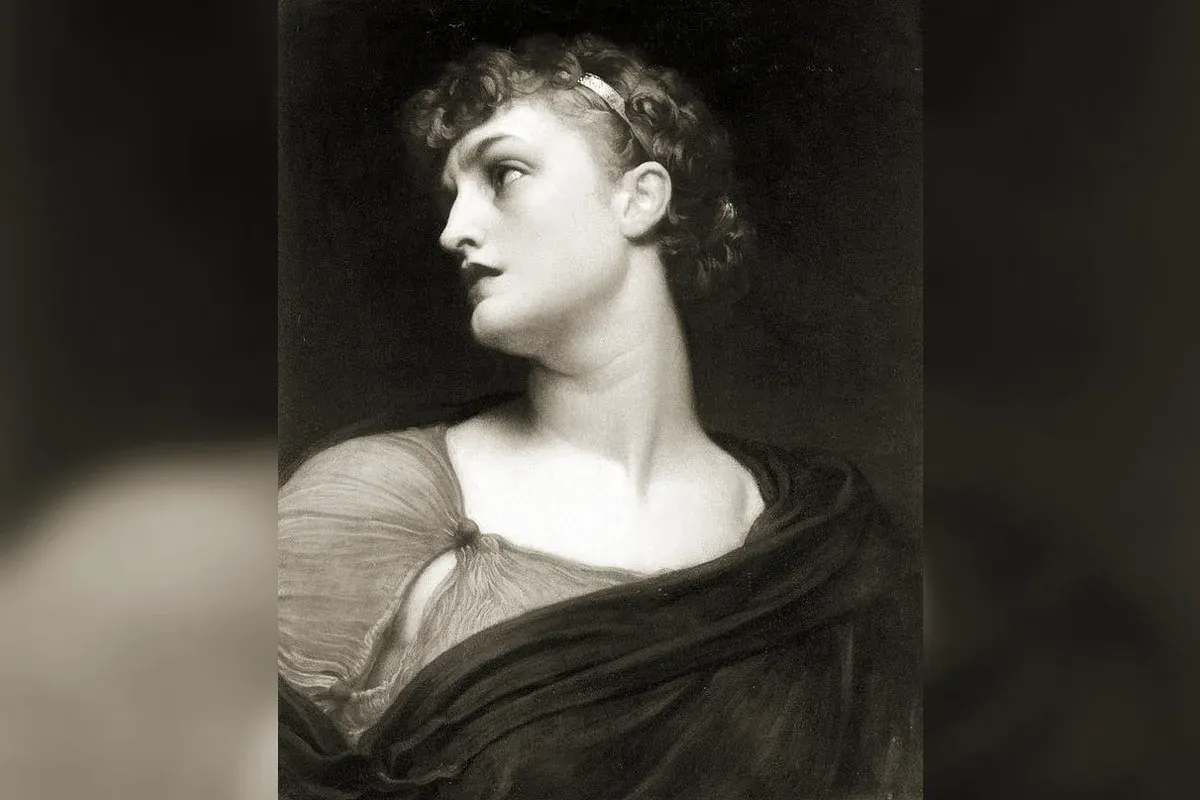
Antigone is the daughter of Oedipus and Jocasta who buries a brother the state has condemned to rot, and dies for it. Sophocles’ play has become the standard text on conscience against law — but the character is older than that play, argues in ways modern readings often skip, and in at least one lost tragedy does not die at all.
Before the tragedy: the road out of Thebes
In Oedipus at Colonus, staged last but set earliest, Antigone is her blinded father’s guide through years of exile. She is not yet defiant; she is simply the one who stays. When Polynices arrives at Colonus to ask for Oedipus’s support, it is Antigone who urges her father to hear him out, and Antigone who then begs her brother not to march on Thebes.
He goes anyway. That scene sets up everything: she has already tried to prevent the war whose dead she will later be forbidden to bury.
The unwritten laws
After Eteocles and Polynices kill each other, Creon grants funeral honours to the city’s defender and forbids them to the attacker. Leaving a body exposed is not a symbolic penalty in Greek terms; it withholds the rites without which the dead cannot take their place among the dead, and it makes the corpse a public pollution.
Antigone covers the body with dust, pours the libations, and admits everything when caught. Her defence is the most quoted passage in Greek tragedy: Creon’s edict is a man’s proclamation, and no man’s proclamation can override the unwritten and unfailing laws of the gods, which are not of today or yesterday and whose origin no one knows.
Her sister Ismene had refused to help, then tries to share the sentence. Antigone will not let her — a refusal that reads as cruelty and functions as protection.
The speech nobody wants
Near the end, condemned and being led away, Antigone gives a very different justification. She would not, she says, have broken the law for a husband or for a child: a husband can be replaced, another child can be borne. But with her mother and father dead, no other brother can ever exist — so this body, and only this body, was worth dying for.
The passage is startling because it abandons the appeal to divine law for a piece of cold arithmetic. Goethe hoped a scholar would one day prove it spurious. Aristotle quotes it approvingly in the Rhetoric as an example of a hard argument well made. And Herodotus records the identical reasoning from a real case: the wife of Intaphrenes, offered by Darius the life of one condemned relative, chooses her brother over her husband and sons, for exactly the reason Antigone gives.
That parallel suggests Sophocles was not inventing a private eccentricity but drawing on a recognisable Greek way of ranking kinship obligations. It also complicates the modern habit of turning Antigone into a pure conscience: she argues from law, from the gods, and from an almost legalistic calculation of what is irreplaceable.
The Antigone who lives
Creon walls her into a rock tomb. She hangs herself; his son Haemon, betrothed to her, kills himself beside her body; his wife Eurydice kills herself on hearing of it. Creon keeps his authority and loses everyone.
That is Sophocles. Euripides wrote an Antigone — now lost, but summarised in antiquity — in which the burial is discovered, Haemon is ordered to execute her and hides her instead, and the couple marry and have a son named Maeon. Ancient readers evidently knew both endings. The version that survived intact is the one that made her a martyr, which is worth remembering when the play is treated as the single authentic myth rather than one dramatist’s choice among several.
Ancient sources
- Sophocles, Antigone (450-470, 904-920) and Oedipus at Colonus
- Herodotus, Histories, 3.119
- Aristotle, Rhetoric, 3.16
- hypothesis to Euripides' lost Antigone
See also
Frequently asked questions
Why does Antigone say she would not have done it for a husband?
Near the end, condemned, she abandons the appeal to divine law for cold arithmetic: a husband can be replaced and another child borne, but with her parents dead no other brother can ever exist. Goethe hoped the passage was spurious; Aristotle quotes it approvingly. Herodotus records the identical reasoning from a real case — the wife of Intaphrenes, offered one relative's life by Darius, chose her brother.
What are the unwritten laws Antigone invokes?
Her defence is that Creon's edict is a man's proclamation, and that no man's proclamation can override the unwritten and unfailing laws of the gods — laws that are not of today or yesterday, and whose origin no one knows. The formula sets two orders of legitimacy against each other: the nomos of the city, and a norm older than any city.