Greek mythology · Creatures
Maia, mother of Hermes and eldest of the Pleiades
In brief
Maia, daughter of Atlas and mother of Hermes: her cave on Mount Cyllene, Apollo's stolen cattle, and her place among the Pleiades.
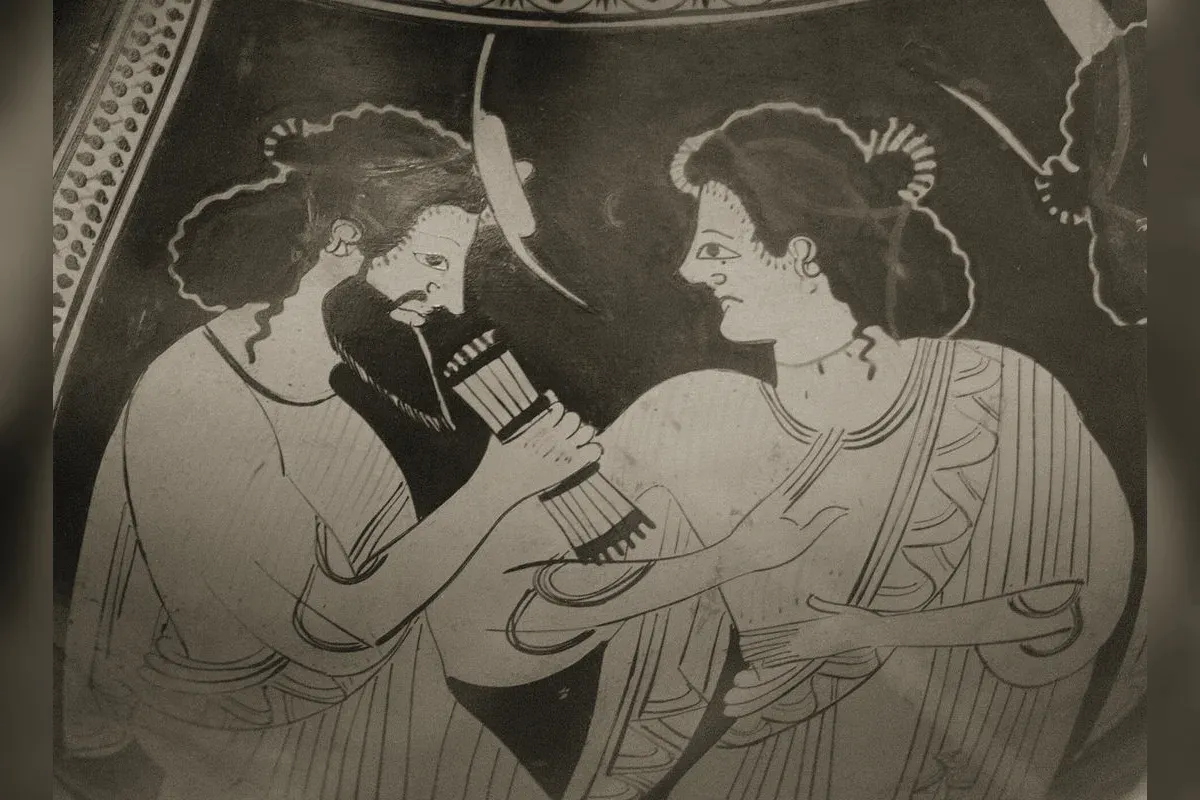
Maia is the eldest of the Pleiades and mother of Hermes. A daughter of Atlas, she avoids the company of the gods and lives in a cave on Mount Cyllene in Arcadia. Greek myth places its most restlessly inventive newborn inside this deliberately secluded home.
The goddess in the cave
The Homeric Hymn to Hermes calls Maia a shy or modest goddess who keeps away from the immortal assembly. Zeus visits her at night while Hera sleeps, and no god or human knows of their union. Hermes is therefore born beyond the notice of Olympus.
Mother and son immediately point in opposite directions. Maia values concealment; Hermes leaves his cradle on his first day, finds a tortoise, invents the lyre, and steals Apollo’s cattle. The god of roads begins by escaping the one room meant to contain him.
Two accounts, two people speaking
Who answers Apollo depends on which source you are reading, and the two should not be merged into a single scene.
In the Homeric Hymn to Hermes, Maia speaks exactly once, and it is to scold her son. He slips back into the cave at daybreak; she asks where he has been, calls him a schemer, and warns him that Leto’s son will carry him off in unbreakable bonds. Hermes answers her like the god of ambiguous speech he is about to become — they will not stay unnoticed and without offerings, he says, and if Apollo makes trouble he will go and raid Delphi.
So when Apollo reaches the cave and searches it, the plea of infant incapacity comes from Hermes, not from his mother. He was born yesterday; his feet are soft and the ground is hard; he knows nothing but warm baths, sleep and his mother’s milk. The joke depends on the liar being the baby, and Maia takes no part in it at all.
Pseudo-Apollodorus distributes the roles differently. There, Apollo goes to Cyllene and puts the accusation to Maia, who shows him the child lying in his swaddling clothes as proof that the charge is absurd. Apollo then takes Hermes before Zeus to claim his cattle.
Both versions end the same way. Zeus hears the dispute and laughs; Hermes gives up the herd and hands over the lyre, and receives authority over flocks and a place among the gods in exchange. His promise to Maia is met within a day.
A Pleiad on earth and in the sky
Maia also belongs to the star story of the seven Pleiades. Their seasonal rising and setting helped Greek farmers and sailors organize work and travel. Through this family she connects the sky carried by Atlas, the Arcadian cave, and the roads over which her son will guide travellers.
Later tradition also makes her the foster mother of Arcas, the child of Zeus and Callisto. The role fits her name, which could refer to a mother, nurse, or midwife. Maia rarely acts outside stories about children, yet her apparent passivity has a result: the hidden cave becomes a divine birthplace, and the son born furthest from Olympus becomes its messenger.
Ancient sources
- Hesiod, Theogony, 938-939
- Homeric Hymn to Hermes, 1-21, 150-280
- Apollodorus, Library, 3.10.2
- Pausanias, Description of Greece, 8.17.1
See also
Frequently asked questions
Is Maia one of the Pleiades?
She is the eldest of the seven, daughters of Atlas and the Oceanid Pleione. That double membership is why she appears in the sky as well as in Arcadia: the cluster's seasonal rising and setting organised the Greek farming and sailing year. Through her the tree connects the sky carried by her father, the cave where Hermes was born, and the roads her son would come to protect.
What does her name mean?
Maia is a common noun before it is a name: it can mean mother, nurse or midwife. The sense fits a later tradition that makes her the foster mother of Arcas, the child of Zeus and Callisto. Her role across the myths is consistent — to hide, to feed, and then to let go.