Greek mythology · Gods & goddesses
Leto, mother of Apollo and Artemis in Greek mythology
In brief
Leto, the Titaness pursued by Hera: her wandering, the birth of Apollo and Artemis on Delos, and Niobe's fatal challenge.
- divine motherhood
- protection of children
- Delos
- Delian palm tree
- +2
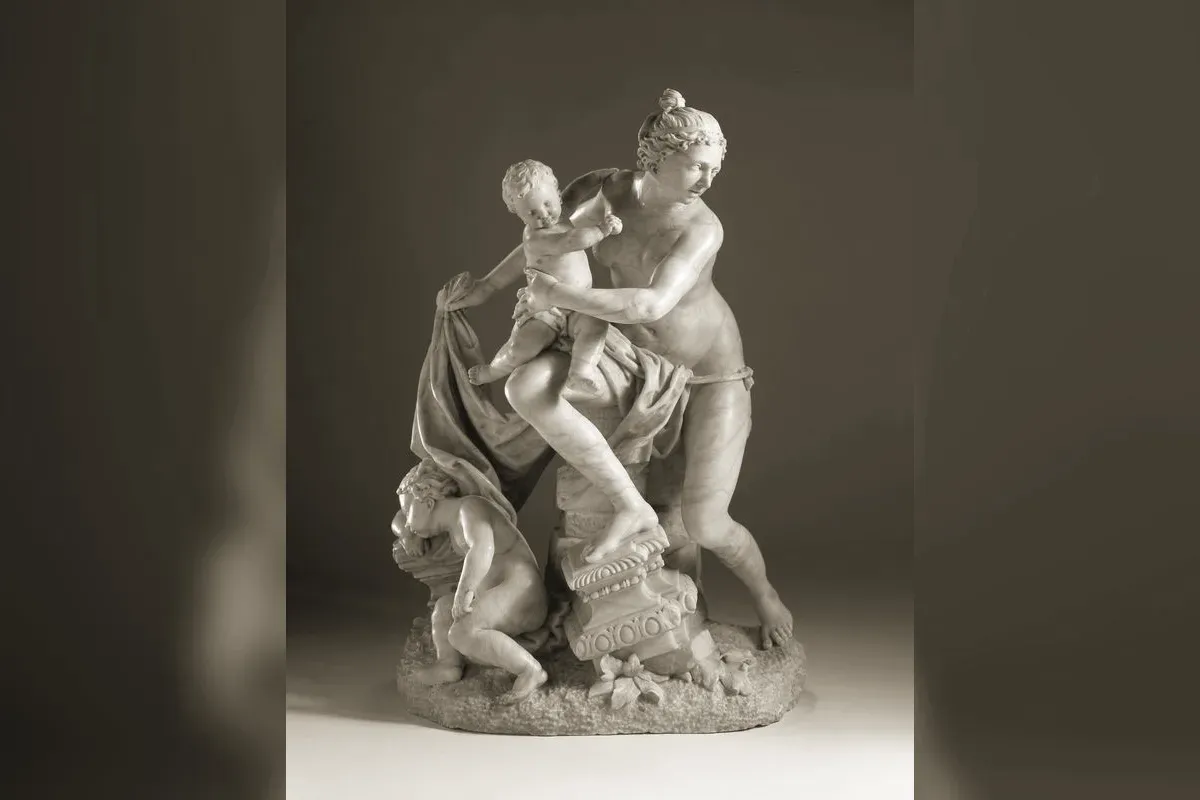
Leto is the mother of Apollo and Artemis, yet her defining story takes place before either child can protect her. A daughter of the Titans Coeus and Phoebe and sister of Asteria, she crosses the Greek world looking for somewhere willing to face Hera’s anger.
Hesiod and Pseudo-Apollodorus name Zeus as the father of both children. Leto’s union with Zeus explains Hera’s jealousy in the tradition that became canonical, although the Homeric Hymn to Apollo focuses chiefly on the mother’s wandering and the god’s birth.
A birth with nowhere to happen
In the Homeric Hymn to Apollo, Leto approaches islands and cities one after another. All refuse. Their fear is directed partly at Hera, but also at the unborn Apollo: no community knows whether so powerful a god will enrich his birthplace or rule it harshly.
Small, barren Delos finally accepts after Leto promises that Apollo will establish his sanctuary there. She grips a palm tree and labours for nine days. The goddesses attend her except Hera, who keeps Eileithyia, the power of childbirth, unaware of what is happening. Iris fetches her in secret, and Apollo is born when she arrives.
Most later accounts place Artemis’s birth on Delos too, sometimes making her the elder twin who assists with Apollo’s delivery. The hymn itself can distinguish Ortygia as Artemis’s birthplace. The variation matters because several sanctuaries competed to anchor the gods’ beginnings in their own landscape.
Motherhood as a divine office
Leto remains present after the birth without acquiring an independent cycle of adventures. In the Iliad she supports Troy alongside her children. When Hera humiliates Artemis in battle, Leto quietly gathers her daughter’s bow and arrows. The scene is brief but exact: she does not fight the conflict for her children, but restores what has been knocked from their hands.
Her cult usually appears beside theirs. At Delos and in Asia Minor, Leto, Apollo and Artemis form a stable divine triad. The Letoon near Xanthos in Lycia became the federal sanctuary of the Lycian cities, showing that the supposedly wandering mother could also stand at the centre of a political landscape.
Niobe’s comparison
Niobe turns Leto’s small family into an insult. She boasts of her many sons and daughters and asks why a woman with only two children deserves worship. Apollo and Artemis answer by shooting Niobe’s children; ancient authors disagree sharply about how many die.
The story is not really a contest in fertility. Niobe treats quantity as a measure of divine rank, while Leto’s two children command plague, healing, wilderness and prophecy. In the Iliad, Achilles tells the episode to persuade Priam to eat despite his grief: even Niobe eventually took food after mourning. Leto’s motherhood therefore joins two themes that Greek myth often separates — the vulnerability of childbirth and the terrifying power of grown children who avenge an insult.
Ancient sources
- Hesiod, Theogony, 404-408, 918-920
- Homeric Hymn to Apollo, 14-126
- Homer, Iliad, 21.470-504; 24.602-617
- Apollodorus, Library, 1.4.1
- Callimachus, Hymn to Delos
See also
Frequently asked questions
Why did the birth of Apollo take nine days?
Because Hera kept Eileithyia, the power of childbirth, beside her on Olympus. The other goddesses were present at Delos, but without Eileithyia the labour could not end. Iris was sent to fetch her in secret, and Apollo was born the moment she arrived. Leto endured nine days gripping a palm tree — the detail that fixed the palm as one of her attributes.
Where was Leto worshipped?
Usually alongside her children, as a complete divine family. At Delos and in several sanctuaries of Asia Minor the triad Leto-Apollo-Artemis was venerated together, and the Letoon at Xanthos in Lycia became the federal centre of a league of cities. Her cult is a good illustration of how Greek religion often worshipped relationships rather than individuals.