Greek mythology · Gods & goddesses
Thetis, sea goddess and mother of Achilles in Greek mythology
In brief
Thetis: the prophecy that made Zeus marry her off to a mortal, the day she saved Zeus from a coup, and why the Styx never appears in Homer.
- the sea
- shape-shifting
- prophecy
- maternal protection
- +3
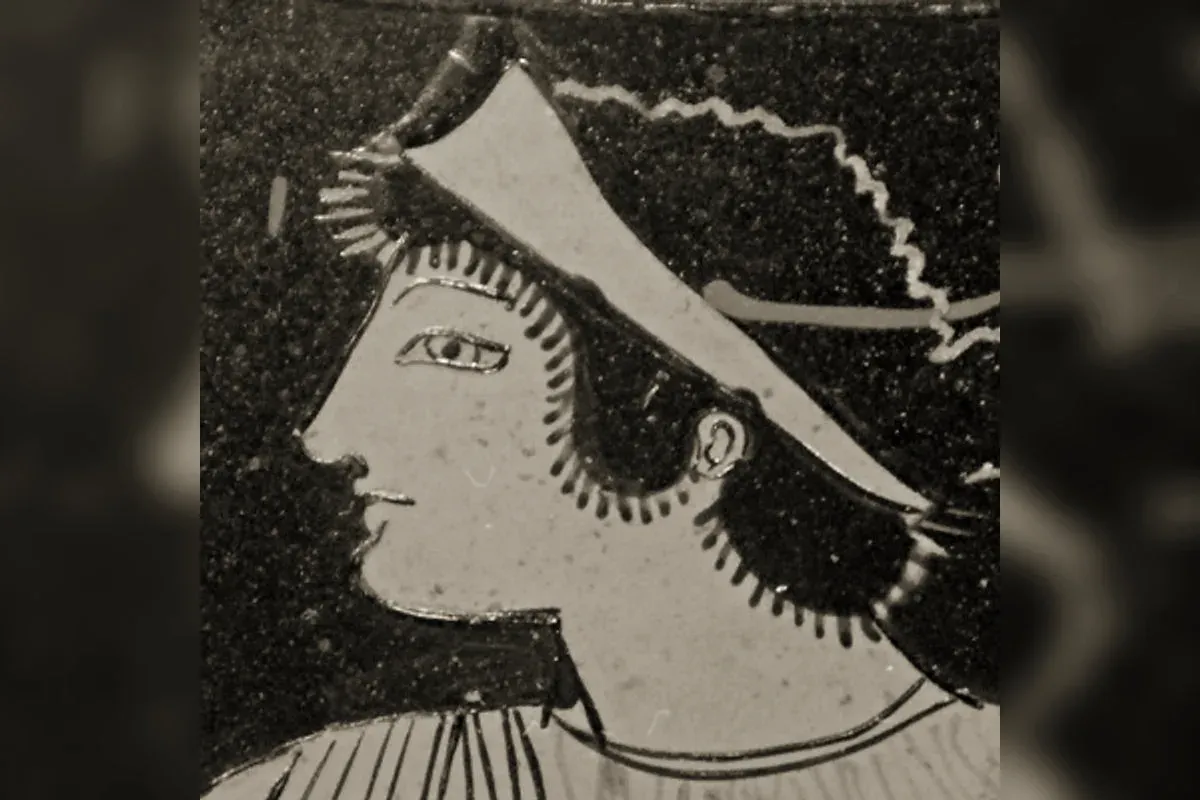
Thetis is a Nereid, one of the fifty daughters of the sea god Nereus — not to be confused with the Titaness Tethys — and the mother of Achilles. She is a minor deity by rank and one of the most consequential figures in Greek myth, because a prophecy about her briefly made her the most dangerous being in the cosmos.
The secret that could have ended Zeus
Both Zeus and Poseidon want her. Then Themis — or, in Aeschylus, Prometheus, who has the information and uses it as leverage while chained to his rock — reveals the condition attached: the son of Thetis will be greater than his father.
The succession myth suddenly has a live case. Uranus fell to Cronus, Cronus fell to Zeus, and any child Zeus fathers on Thetis will complete the sequence. The gods therefore withdraw and marry her, against her will, to a mortal: Peleus, king of Phthia. A son greater than Peleus is merely the best of the Greeks. A son greater than Zeus would have been the end of the Olympian order.
This is the mechanism of the whole Trojan cycle. Achilles is short-lived and glorious because the gods needed his father to be mortal — the Iliad’s central grief is a byproduct of Zeus protecting his throne.
The day she saved Zeus
Homer drops an astonishing piece of backstory into Book 1 and never returns to it.
Achilles reminds his mother of the time the other Olympians — Hera, Poseidon and Athena — tried to bind Zeus and depose him. Thetis broke the coup by fetching the hundred-handed Briareus up to Olympus, where he sat beside Zeus in his strength, and the conspirators lost their nerve.
She uses the debt immediately, going to Zeus to ask that the Greeks be beaten until they beg for her son’s return. Zeus grants it, complaining that Hera will make his life impossible. Thousands die because a marine deity of the second rank once did the king of the gods a favour and kept the receipt.
The armour, and the grief
In Book 18, when Patroclus is dead and Achilles is destroying himself on the shore, Thetis rises from the sea with her sisters and delivers the poem’s most explicit statement of her position: she bore a son to be the best of men, she reared him like a young tree in an orchard, she cannot keep him from Troy, and she will never welcome him home.
She then goes to Hephaestus and obtains the new armour, including the shield whose hundred lines of description show a whole world — cities at war and at peace, ploughing, harvest, a wedding, a lawsuit, dancing — to be carried by a man who has just decided to die.
Thetis knows the ending throughout. She has told Achilles his choice: a long obscure life at home, or a short one with undying fame. Everything she does after that is helping a son she cannot save toward a death she has already seen.
Where the heel comes from
The famous vulnerable heel is not Homeric, and it is much later than most readers assume.
Homer’s Achilles is simply the strongest fighter alive; he is wounded in the Iliad and bleeds like anyone else. The earlier attempts at immortality are different in kind: in Apollonius, Thetis anoints the infant with ambrosia and burns his mortality away in the fire by night, until Peleus wakes, sees his son in the flames, and cries out — at which she abandons the process and leaves him for good.
The dipping in the Styx, held by the ankle, appears clearly only in Statius’ Achilleid, written in the first century CE — roughly nine hundred years after Homer. It is the version everyone knows, and it is the most recent element in the story.
Ancient sources
- Homer, Iliad, 1.348-427; 18.35-147; 24.104-140
- Pindar, Isthmian, 8.26-48
- Aeschylus, Prometheus Bound, 907-927
- Apollonius of Rhodes, Argonautica, 4.869-879
- Statius, Achilleid, 1.133-282
See also
Frequently asked questions
How did Thetis save Zeus?
Homer drops the story into Book 1 and never returns to it. When Hera, Poseidon and Athena tried to bind Zeus and depose him, Thetis broke the coup by fetching the hundred-handed Briareus up to Olympus, where he sat beside Zeus in his strength until the conspirators lost their nerve. She uses the debt immediately, asking that the Greeks be beaten until they beg for her son's return.
Did Thetis try to make Achilles immortal?
Yes, but not the way most people think. In Apollonius she anoints the infant with ambrosia by day and lays him in the fire by night to burn away his mortality, until Peleus wakes, sees his son in the flames and cries out — at which she abandons the process unfinished and leaves for good. The dipping in the Styx, held by the ankle, appears clearly only in Statius, in the first century CE.