Greek mythology · Heroes & mortals
Telemachus, son of Odysseus and prince of Ithaca in Greek mythology
In brief
Telemachus in the Odyssey: the four-book education that opens the poem, the ambush he escapes, and the strange marriage the Telegony gives him.
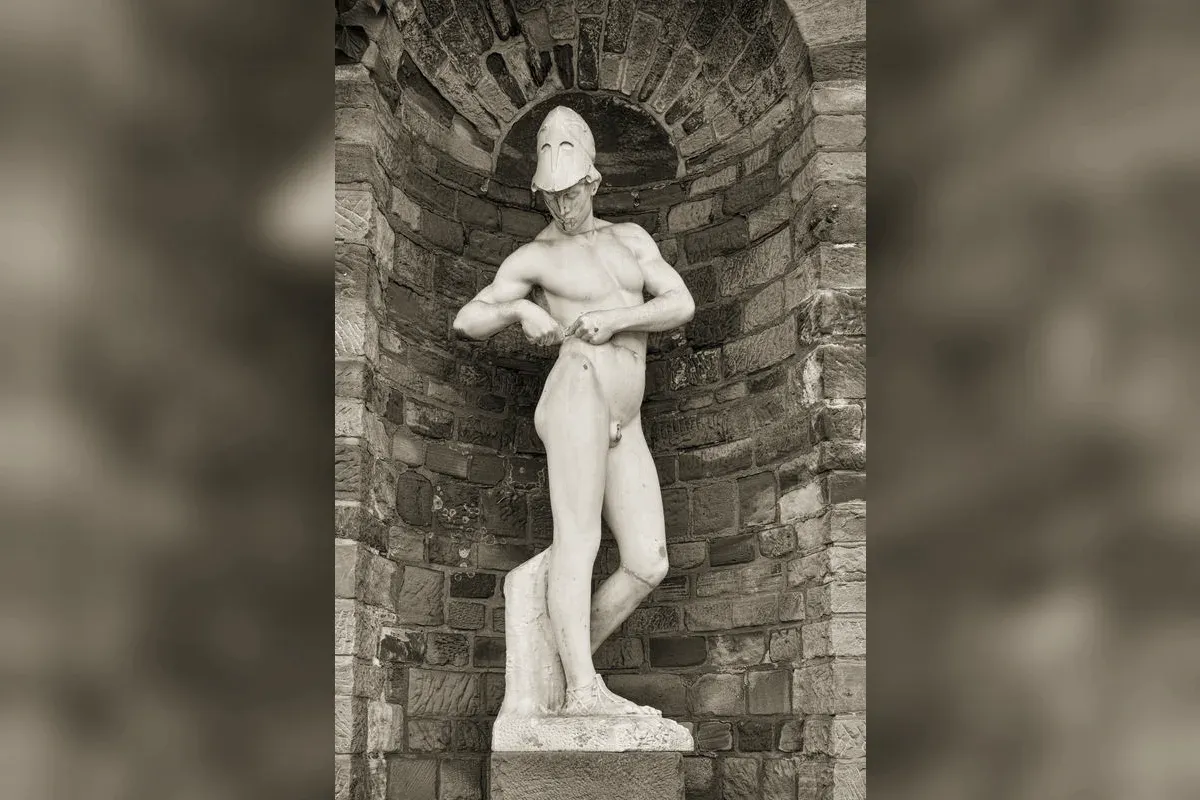
Telemachus is the son of Odysseus and Penelope, an infant when his father sailed for Troy and a young man of about twenty when the Odyssey begins. The poem’s most deliberate structural choice is that it does not start with its hero: it spends four books on his son first.
Why the poem begins with him
Books 1 to 4 — the Telemachy — show an Ithaca with no functioning authority. Suitors eat the estate, the assembly has not met in twenty years, and the heir is a young man everyone talks over. Athena arrives disguised as a family friend and does something more useful than fighting for him: she tells him to convene the assembly, speak in it, and go looking for news.
He does all three, and does them imperfectly. His assembly speech collapses into tears and achieves nothing procedurally. But he has stood up in public and stated a claim, and the suitors’ reaction — immediate, alarmed, murderous — shows they understood exactly what it meant.
He then sails to Pylos and Sparta, questioning Nestor and Menelaus about the returning Greeks. He gathers no proof his father is alive. What he gains is standing: he is received as a guest-friend by two royal houses, given gifts that establish reciprocal obligation, and treated as Odysseus’ son rather than as an obstacle.
The ambush
The suitors, understanding the threat, post a warship in the strait between Ithaca and Same to kill him on his return. Athena warns him and routes him around it.
The detail matters because it settles the political question the poem has been circling. The suitors are not simply rude houseguests; they are prepared to murder the heir to secure the succession. Odysseus’ slaughter of them, which modern readers often find disproportionate, is framed by Homer as a response to an attempted assassination.
Recognition, and the fight
Back on Ithaca, Telemachus meets his father in the swineherd Eumaeus’ hut, where Athena briefly strips away the beggar’s disguise. Telemachus’ first reaction is to refuse to believe it — he assumes a god is deceiving him — which is exactly the scepticism his mother will show later.
In the battle in the hall he fights beside Odysseus, kills his share of suitors, and makes one serious blunder: he leaves the storeroom door open, letting the suitors arm themselves. Homer neither excuses it nor dwells on it. The last book brings three generations into the line together when Laertes takes up arms beside them.
The stranger from the sea
The Odyssey ends with the household restored, but the epic cycle did not stop there. The lost Telegony told how Telegonus — the son Circe bore to Odysseus — came looking for his father, failed to recognise Ithaca, raided it, and killed Odysseus with a spear tipped in a stingray’s barb.
Its ending is one of the strangest things in Greek myth: Telegonus takes the body, along with Penelope and Telemachus, back to Aeaea, where Circe makes them immortal — and then Telemachus marries Circe while Telegonus marries Penelope. Each son marries the other’s mother.
Almost nothing of the poem survives beyond a summary, and the sequence reads less like myth than like a genealogist’s attempt to tie every loose thread into a knot. It is worth knowing chiefly as a reminder of how much narrative surrounded the Odyssey that Homer, or whoever shaped it, chose to leave out.
Ancient sources
- Homer, Odyssey, Books 1-4, 15-24
- Apollodorus, Epitome, 7.36-37
- Proclus' summary of the Telegony of Eugammon of Cyrene
See also
Related entries
Stories featuring this entity
Frequently asked questions
Do the suitors try to kill Telemachus?
Yes. Understanding what his public claim means, they post a warship in the strait between Ithaca and Same to ambush him on his return, and Athena routes him around it. The detail settles the political question the poem circles: they are not merely rude houseguests but men prepared to murder the heir. Odysseus's slaughter of them, which modern readers often find disproportionate, is framed as a response to attempted assassination.
What happens to Telemachus after the Odyssey?
The lost Telegony told a strange sequel. Telegonus, the son Circe bore to Odysseus, came looking for his father, failed to recognise Ithaca, raided it and killed Odysseus with a spear tipped in a stingray's barb. He then took the body, Penelope and Telemachus back to Aeaea, where Circe made them immortal — and Telemachus married Circe while Telegonus married Penelope.