Gods of death across 8 world mythologies
In brief
A comparison of death deities and underworld rulers in Greek, Egyptian, Norse, Roman, Japanese, Hindu, Aztec, and Celtic mythologies.
- Greek mythology
- Egyptian mythology
- Norse mythology
- Roman mythology
- +4
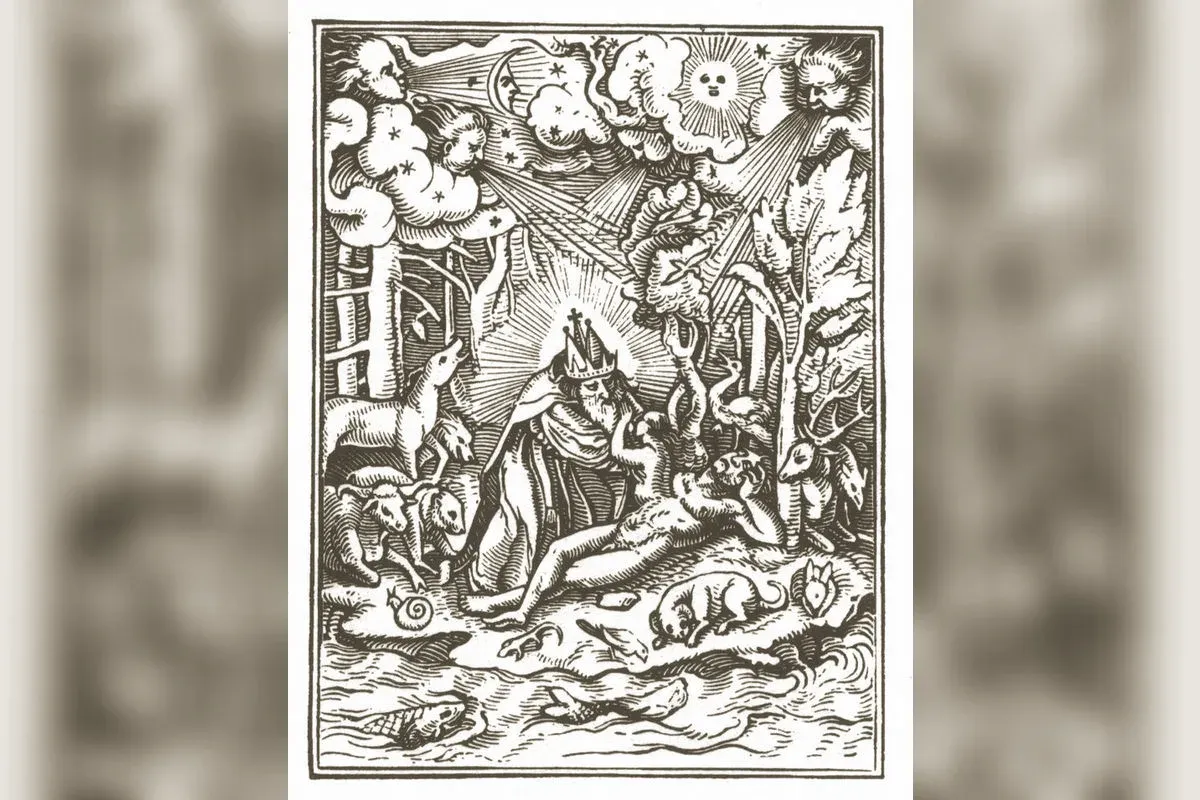
Every human culture has placed a divine power at the boundary between the living and the dead to govern that passage. But beneath the shared label “god of death” lie radically different conceptions: fair judge or dark sovereign, neutral guide or active predator, beloved figure or feared one. A comparative survey across eight mythologies.
1. Hades — the invisible sovereign of Greece
In the Greek pantheon, Hades is the son of Cronus and Rhea, brother of Zeus and Poseidon. After the Olympians’ victory over the Titans in the Titanomachy, the drawing of lots assigned each brother his domain: Zeus received the sky, Poseidon the seas, and Hades the underworld.
Hades does not kill — he receives the dead. He is not a deity of death in the active sense: those roles belong to Thanatos (the personification of gentle death) and the Keres (violent deaths). Hades is a sovereign of a realm, the impassive administrator of a cosmic space. His very name was avoided by the Greeks, who preferred euphemisms like Plouton (the Rich One) — since the earth’s riches come from its depths.
His kingdom, with Tartarus for the criminal and Elysium for the blessed, is structured according to a logic of justice overseen by three judges: Minos, Rhadamanthus, and Aeacus. The infernal river, crossed only in the boat of the ferryman Charon and only for a coin, separates the world of the living from that of the dead. Cerberus, the three-headed dog, ensures that none may enter or leave without authorisation. Hades rules alongside Persephone, Demeter’s daughter whom he abducted and made his queen — a figure who brings a nuance of compassion to the realm of the dead, as her intercession for Orpheus demonstrates.
2. Osiris — Egypt’s fair judge
In Egypt, death is not a boundary but a transformation. Osiris, god of resurrection and sovereign of the Duat (the Egyptian realm of the dead), embodies this conception: killed by his brother Seth, then resurrected by his wife Isis, he became the symbol of death overcome and of perpetual renewal.
Osiris presides over the Judgment of the Dead (the weighing of the heart): the deceased’s heart is placed on a scale against the feather of Maat (truth and justice). If the heart is lighter than the feather, the soul is admitted to eternal happiness. If it is too heavy — weighed down by sin — it is devoured by the composite creature Ammut, and the soul ceases to exist.
Anubis, the jackal-headed god, serves as guide and guardian of the judgment: he weighs the hearts, guides souls to Osiris, and embalms bodies to preserve the deceased’s identity.
The Egyptian conception of death is fundamentally optimistic for the virtuous: death is the beginning of a better, eternal life — provided one has lived according to Maat.
3. Hel — the silent sovereign of Scandinavia
In Norse mythology, Hel is the daughter of Loki and the giantess Angrboða, sister of the wolf Fenrir and the Midgard Serpent Jörmungandr. Odin assigned her rulership of Niflhel (Niflheim), the realm of those who died of cold, old age, and disease — as opposed to Odin’s Valhalla, reserved for warriors fallen in battle.
Hel is depicted as a half-living, half-dead figure: one cheek pink and alive, the other black or bluish. Her realm, also called Hel, is a place of grey mist and absence rather than active suffering — not a hell but a place of gradual dissolution of identity.
She is passive rather than active: she does not attract death, she receives it. When the god Baldr died and his companions asked Hel to release him, she replied that she would do so if all creatures in the world wept for him — which they all did, except Loki disguised as a giantess. Baldr remained in Hel’s realm until the end of the world (Ragnarök), proof that death in the Norse tradition is generally irrevocable.
4. Pluto / Dis Pater — the Roman version of Hades
Rome largely inherited the Greek conception. Pluto is the interpretatio romana of Hades, retaining his role as sovereign of the underworld and his Greek epithet name (Plouton). But the Romans also developed Dis Pater (Father of Riches), a distinct and older figure who presided over the wealth of the earth’s depths and death as a natural principle.
Roman death cult was distinguished by its civic dimension: the Lares (spirits of ancestors) and Manes (souls of the dead) were regularly honoured in households and during public festivals such as the Parentalia. Roman death is less a rupture than an integration into the communal fabric — dead ancestors continued to belong to the family.
5. Yama — the first mortal become judge in Hinduism
In the Vedic and Hindu tradition, Yama (Yamraj) is the god of death and posthumous justice. Unlike other death gods, Yama has a unique origin: he was the first human being to die and thereby became the sovereign of the realm of the dead, having himself opened the path of death.
Yama is depicted as an austere king holding the danda (staff of justice) and the pasha (lasso for capturing souls). His messengers, the Yamduts, collect the souls of the dying and bring them before him. He consults Chitragupta, his divine scribe who keeps a record of every action of every living being, in order to render a fair judgment.
The Hindu conception of death is inseparable from karma and reincarnation (samsara): Yama does not govern an eternal dwelling but a temporary passage, a stage of purification before the next reincarnation. Only liberation from the cycle (moksha) ends the cycle of deaths and rebirths.
6. Izanami — Japan’s dead goddess
In Japanese Shinto mythology, Izanami-no-Mikoto is the co-creator goddess of the world. She died giving birth to Kagutsuchi, the god of fire, consumed by her own child’s flames. Her husband Izanagi descended into Yomi (the underworld) to bring her back — but found her already in decomposition, defiled and furious that he had seen her in that state. She pursued him with an army of demons (shikome).
Izanami embodies death as contamination and corruption — a central concept in Shinto thought, where death is a form of pollution (kegare) requiring ritual purification. Unlike other death gods, she is neither a judge nor an impassive guardian: she is a wounded mother transformed into a hostile power, a figure of death as irreparable severance of the family bond.
Emma-Ō (adapted from the Buddhist Yama) is a distinct figure who presides over the Buddhist judgment of the dead in the syncretic Japanese tradition.
7. Mictlantecuhtli — the Aztec skeleton god
In Aztec cosmology, Mictlantecuhtli is the lord of Mictlan, the ninth and deepest level of the underworld, dwelling of the ordinary dead (those who neither died in battle nor died of a death associated with the rain gods). Depicted as a skeleton or a man with a skull-face adorned with eyeballs, he sits in absolute darkness with his wife Mictecacihuatl.
Aztec death is fundamentally cosmic: the dead are integrated into vast natural cycles. Warriors killed in combat accompany the Sun from sunrise to zenith. Women who died in childbirth accompany the Sun from zenith to sunset. Infants who died before weaning dwell in a paradisiacal tree.
Mictlan itself is a nine-trial journey the dead must complete over four years, guided by the xoloitzcuintle dog (the Mexican hairless dog buried with the deceased to serve as guide).
8. Arawn / Donn — Celtic death between two worlds
In the Irish Celtic tradition, Donn (the Dark One) is the god of the dead who dwells on an island at the far west of Ireland, Tech Duinn (the House of Donn), where the souls of the deceased gather before their journey to the Otherworld (Tír na nÓg, the land of eternal youth).
In the Welsh tradition, Arawn is the king of Annwn (the Otherworld), a realm of wealth and beauty that is not a place of punishment but a parallel plane of reality coexisting with our world — accessible to certain heroes or through certain mythic passages.
Celtic death is less a boundary than a transition to another state of being. The Celtic Otherworld is not subterranean but parallel — it coexists with the world of the living, separated by permeable veils that heroes, fairies, and the dead cross.
Synthesis: eight readings of death
These eight traditions reveal fundamental polarities in the human conception of death:
Judge or passive sovereign: Osiris and Yama actively judge souls; Hades and Hel receive them without immediate moral judgment.
Death as rupture or as continuity: Greek death is a boundary (the Styx), Celtic death is a transition to a parallel world, Aztec death is an integration into cosmic cycles.
Individual death or collective death: the Norse world structures death according to its manner (battle, disease, drowning), with different destinations depending on the circumstances of the passing.
Death and justice: almost all traditions link death to a moral judgment (weighing of the heart, weighing of karma, judgment of Minos), revealing the universality of the connection between death and ethics.
What strikes in this comparison is that no culture conceived death as absolute nothingness: everywhere, the dead continue to exist in some form, governed by a divine power that orders the invisible as Zeus orders the visible.
Further reading
To explore the Greek god of the dead and his kingdom, read the page on Hades. For the two opposing regions of his realm, consult the pages on Tartarus and Elysium. For the creature that guards the entrance to the Greek realm of the dead, see the page on Cerberus. For the war that established the division of the cosmos among the three brothers, read the narrative of the Titanomachy. For the Greek heroes who crossed the realm of the dead and returned, see the pages on Heracles and Orpheus. To explore the Egyptian god of the dead in depth — his death, resurrection, and role as judge of souls — read the page on Osiris. For the jackal-headed guide who presides over the weighing of the heart, see the page on Anubis. For the deity whose murder of Osiris set the entire Egyptian death cycle in motion, read the page on Seth. For the Norse sovereign of the realm of those who die of sickness and old age, read the page on Hel.
See also
Related entries
- Hades, god of the Underworld in Greek mythology
- Thanatos, Greek god of death personified
- Charon, ferryman of the Greek underworld and the coin for the dead
- Persephone, queen of the underworld and goddess of spring
- Osiris, god of the dead and resurrection in ancient Egypt
- Anubis, jackal-headed guardian of the dead in Egyptian mythology
- Seth, god of chaos and the desert in Egyptian mythology
- Hel, Norse goddess of the dead and ruler of the underworld
Frequently asked questions
Do all mythologies have a god of death?
Almost all major world mythologies feature one or more deities associated with death and the realm of the dead. These figures vary considerably: some are judges (Hades, Osiris, Yama), others are guides or ferrymen (Anubis, Hermes as psychopomp), others are active rulers of an underworld kingdom (Mictlantecuhtli, Hel). Death is universally perceived as a passage governed by a divine power.
What is the difference between a god of death and a god of the dead?
A god of death presides over the process of dying — associated with death as an event. A god of the dead governs the realm where souls dwell after death. Often the same figure combines both roles (Hades, Osiris), but sometimes they are separate: in Greece, Thanatos (the personification of gentle death) is distinct from Hades (sovereign of the underworld kingdom).
Which death god was most feared in antiquity?
Each culture had its own intensity of dread. Hades was feared rather than hated — his name was avoided for fear of attracting his attention. Mictlantecuhtli demanded human sacrifice. Hel presided over a quiet but irrevocable death. Osiris, by contrast, was seen as just and benevolent to those who led a virtuous life.