Greek mythology · Heroes & mortals
Paris of Troy, the exposed prince who lost his own city
In brief
Paris, son of Priam: Hecuba's dream, the herdsman on Ida, the archer Homer despises, the arrow that kills Achilles and Oenone's final refusal.
- beauty and seduction
- archery
- violated hospitality
- bow and quiver
- +2
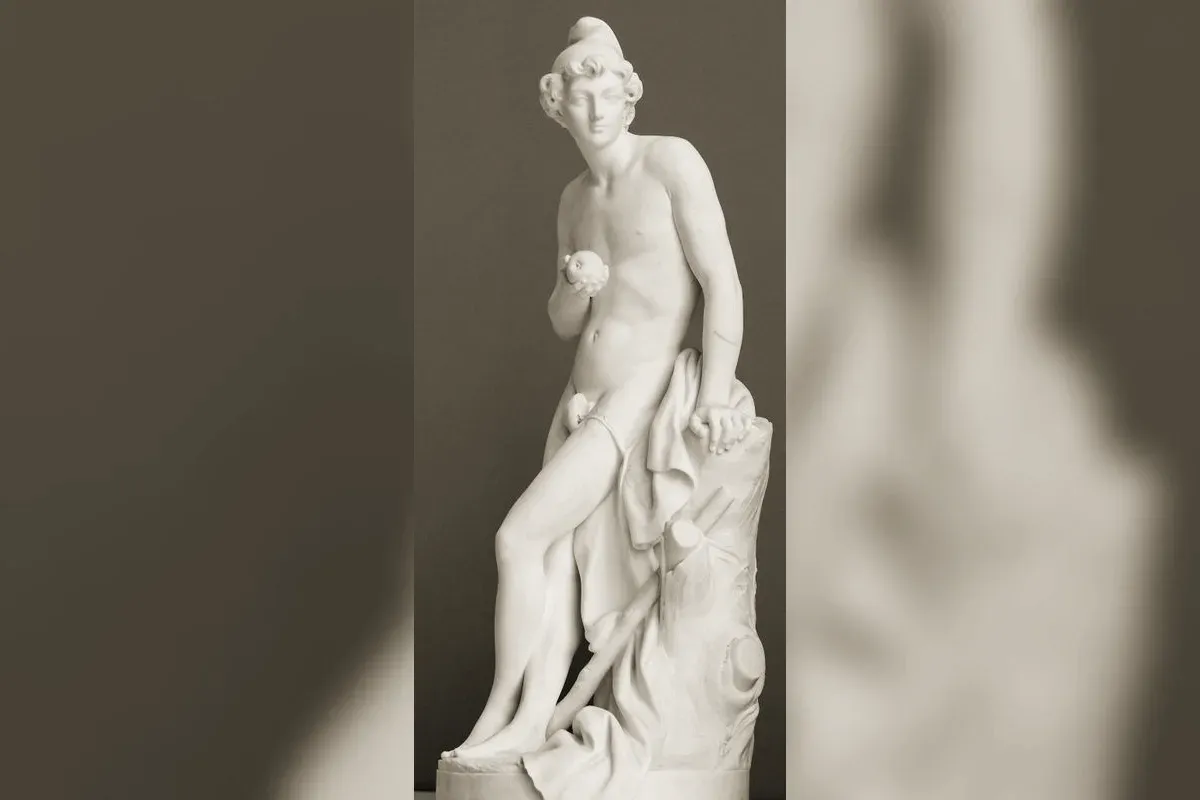
Paris, whom Greek tradition just as often calls Alexandros, is the second son of Priam and Hecuba, and the man through whom Troy is lost. Condemned by a dream before he was born, spared by a herdsman’s pity, chosen as judge by three goddesses and then given the most beautiful woman alive, he performs no feat that is properly his own — and yet every stage of the Trojan War follows from something he chose. He is the most fully realised anti-hero in Greek poetry.
Hecuba’s dream and the exposed child
The myth starts before he does. Pregnant with her second son, Queen Hecuba dreams that she bears a flaming torch whose fire spreads through the whole city. The dream goes to the seers — Aesacus, Priam’s eldest son and a reader of dreams, in some accounts; Cassandra in others — and the reading is the same either way: this child will burn Troy (Apollodorus 3.12.5; Euripides, Trojan Women 919-922).
Priam orders the baby exposed. The herdsman Agelaus, sent to leave him on Mount Ida, cannot quite finish the job and abandons him alive. Five days later he finds the child suckled by a she-bear, and raises him as his own.
The pattern is the most regular one in Greek myth, the pattern of Oedipus and of Perseus: the prophecy is fulfilled by the very measures taken to defeat it. Had Priam kept his son at court, there would have been no shepherd on Ida — and no reason for three goddesses to come looking for a judge among the cattle.
Oenone, the first wife
Before Helen there is Oenone, and this part of the story, usually skipped, carries its moral weight.
Oenone is a nymph of Ida, daughter of the river Cebren, given the art of healing by Apollo and prophecy by Rhea. She marries the young herdsman, bears him a son, Corythus, and warns him: if he sails for Greece he will come back wounded, and she alone will be able to save him (Apollodorus 3.12.6; Parthenius, Erotica Pathemata 4).
Ovid gave her the fifth of the Heroides, a letter in which she recalls the beeches of Ida where Paris once cut their two names. The letter is Roman; the datum is old. From the archaic period on, Paris is the man who leaves. He abandons Oenone as he will violate Menelaus’s hospitality: betrayal is not an accident in his life, it is a habit.
The judgement: an arbitration that is nothing of the kind
The episode that decides his fate is quickly stated: Eris throws a golden apple “for the fairest” at the wedding of Peleus and Thetis; Hera, Athena and Aphrodite all claim it; Zeus refuses to rule; and Hermes brings the three of them to the herdsman on Ida. The full scene and the competing offers are told in the Judgement of Paris.
What matters here is the shape of his choice. Hera offers sovereignty over Asia; Athena offers victory in battle and good counsel. Both would make Paris a king and a fighter — a hero of the ordinary sort. Aphrodite offers a woman. He takes the woman.
Homer never narrates the scene. He alludes to it exactly once, in the last book of the Iliad, recalling “the blind folly of Paris, who insulted the goddesses when they came to his steading and praised the one who granted him painful lust” (24.25-30). The Greek word is makhlosunê — not love but appetite without measure. The oldest poem in the tradition already passes judgement on Paris, and it judges him on desire.
Taking Helen: the crime against hospitality
Paris sails to Sparta, where Helen is queen and Menelaus king, and is entertained for nine days as a guest. Menelaus then leaves for Crete to bury his grandfather. Paris departs with Helen and a share of the palace treasure.
The decisive offence is not the seduction; it is xenia. In the Homeric world, guest-friendship is an oath under the protection of Zeus Xenios himself. To carry off the wife and the goods of the man who fed you under his own roof is not a love affair but a sacrilege — and that sacrilege is what gives the Greek coalition its religious warrant.
Antiquity argued endlessly about Helen’s share of the blame, and Herodotus reports the most striking rationalisation of all. Egyptian priests told him that a storm drove the pair to the mouth of the Nile, where King Proteus, disgusted by the abuse of hospitality, impounded Helen and the treasure and sent Paris home empty-handed. On this account the Greeks besieged a city for ten years over a woman it did not have, and refused to believe the Trojans who told them so (2.113-120). Herodotus adds his own reasoning: had Troy held Helen, Priam would surely have given her up rather than watch his sons die.
The archer of the Iliad
Within the poem, Paris holds a unique position: he is the only front-rank figure whose excellence is worth nothing in war.
Book 3 shows him striding out ahead of the Trojan line in a leopard skin, challenging the best of the Achaeans — then shrinking back “like a man who has seen a snake” the moment Menelaus steps forward. Hector rounds on him in the harshest speech in the epic: Dysparis, “Paris of evil”, pretty face, woman-chaser, “better you had never been born”. Paris takes the rebuke without anger, which is another oddity — he has no honour to defend.
The duel goes ahead. Menelaus knocks him down and drags him by the helmet, and Aphrodite has to snap the chinstrap and lift him away in a mist. She sets him down in his scented bedroom, then goes and compels Helen to join him there. The scene is humiliating, and Homer does nothing to soften it.
He is not a joke throughout, though: he is one of Troy’s best bowmen. He wounds Diomedes in the foot and hits Machaon, the physician of the Greek army (11.369-395). But he always strikes from a distance and from cover, and the poem never grants him the honour of close combat. Diomedes, hit, insults him on precisely that point. Homer is drawing a deliberate contrast between the spear and the bow — between Hector and his brother.
The arrow that kills Achilles
Paris’s one decisive act falls outside the Iliad, and it is enormous.
The Cyclic poems — the Aethiopis, as summarised by Proclus — tell how Achilles, storming the Scaean Gate, is brought down by an arrow of Paris guided by Apollo. The Iliad already announces it through the dying Hector (22.359-360). The greatest of the Greek warriors therefore falls to the most despised of the Trojans, at range, by a weapon the heroic code holds cheap.
The irony is not incidental — it is the meaning of the character. Paris does not defeat Achilles; he cancels him. Heroic superiority is no defence against the flight of an arrow.
His death, and Oenone’s refusal
The Little Iliad carries the story on. Philoctetes, fetched back from Lemnos with the bow and poisoned arrows of Heracles, wounds Paris.
The Hydra’s venom does not forgive, but Paris remembers his first wife’s prophecy. He has himself carried up Ida to Oenone and begs her to heal him. She refuses, flatly and without a speech. Quintus of Smyrna expands the moment: the nymph tells him to go and die with Helen, since Helen was the one he chose (10.284-331).
He starts back down and dies on the way. Oenone, seized with remorse, runs after him, finds him already on the pyre, and throws herself onto it. It is the only point in the whole tradition where the man is worth pitying — and it is telling that Helen is not the one who mourns him. The woman the gods gave him does not follow him into death; the one he left behind does.
Alexandros of Wilusa: a historical thread
One further point deserves careful statement, because it is often overstated.
The Hittite archives at Hattusa preserve a treaty of about 1280 BC between King Muwatalli II and a vassal named Alaksandu, ruler of the city of Wilusa in western Anatolia. Most Hittitologists now accept the equation Wilusa = (W)ilios, that is Ilion, and set Alaksandu beside Greek Alexandros — Homer’s second name for Paris.
What this establishes is limited, and worth saying plainly: not that the Paris of legend existed, but that a name of the Alexandros type was borne by a ruler in the Troad centuries before the Homeric poems took shape. It is evidence for the depth of the Trojan material, not confirmation of the myth. It does, however, illuminate an oddity in the text — Paris is the only major character Homer gives two names, and the doublet probably marks the join between two traditions.
Further reading
For the full account of the arbitration that fixes his fate, read the Judgement of Paris, and for the war it produces, the Trojan War. For the woman he takes and the ancient debate over her guilt, see Helen of Troy. For the brother who despises him and dies for the city he lost, see Hector; for his parents, Priam and Hecuba, whose dream opens the whole story. For the hero he brings down with an arrow, see Achilles, and for the goddess who protects him to the point of humiliation, Aphrodite.
Ancient sources
- Homer, Iliad, 3.15-75 and 3.373-448; 6.313-368; 11.369-395; 24.25-30
- Proclus, Chrestomathy (summaries of the Cypria, Aethiopis and Little Iliad)
- Euripides, Trojan Women 919-944; Andromache 274-308
- Apollodorus, Library, 3.12.5-6; Epitome 3.1-5; 5.8
- Herodotus, Histories, 2.113-120
- Ovid, Heroides 5 (Oenone to Paris), 16-17
- Quintus of Smyrna, Posthomerica, 10.253-489
See also
Frequently asked questions
Why was Paris abandoned as a baby?
Because Hecuba, pregnant with him, dreamt she gave birth to a blazing torch that set Troy alight. The seers — Aesacus or Cassandra, depending on the source — read it as the fall of the city, and Priam ordered the child exposed on Mount Ida. The herdsman sent to do it left him alive. The story follows the standard Greek pattern: the prophecy comes true only because someone tried to prevent it.
Why do the heroes of the Iliad despise Paris?
Because he fights with a bow. In the Homeric code the archer strikes from cover without risking his body; Diomedes calls him a 'bowman, foul fighter, glorious in your curls, ogler of girls'. Even Hector names him Dysparis, 'Paris of evil', and tells him his looks are worth nothing. He is the one major figure of the epic whose excellence is useless on a battlefield.
Who kills Paris, and how does he die?
Philoctetes wounds him with one of the poisoned arrows of Heracles, brought back from Lemnos late in the war. Dying, Paris has himself carried up Mount Ida to Oenone, the nymph he had married and left, and who alone could heal him. She refuses. By the time she relents he is dead, and she takes her own life on his pyre.